Cracking the Code: How AI Is Resurrecting Languages Lost for 3,000 Years
Readholmes Editorial Team
March 19, 2026
0
Cracking the Code: How AI Is Resurrecting Languages Lost for 3,000 Years
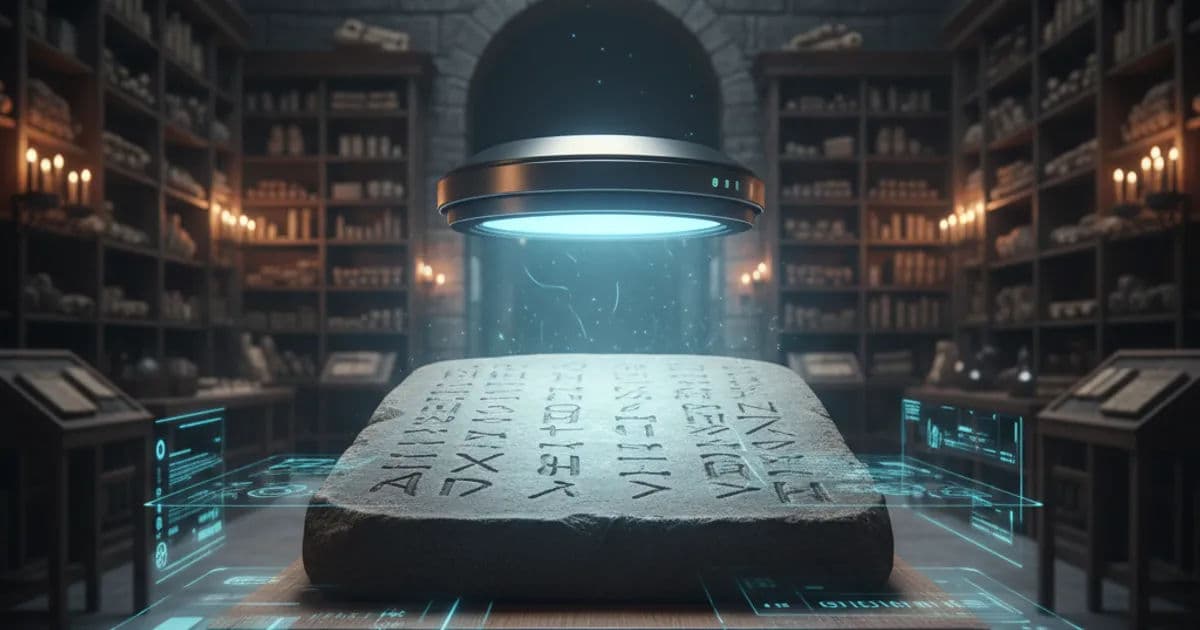
For centuries, the history of humanity has been locked away in silence. Thousands of clay tablets, stone inscriptions, and papyrus fragments sit in the basements of museums and the dust of excavation sites, holding the keys to lost civilizations, forgotten laws, and ancient poetry. For decades, human linguists have labored to decipher these scripts, often hitting a wall where the sheer lack of bilingual texts a "Rosetta Stone" equivalent makes progress agonizingly slow.
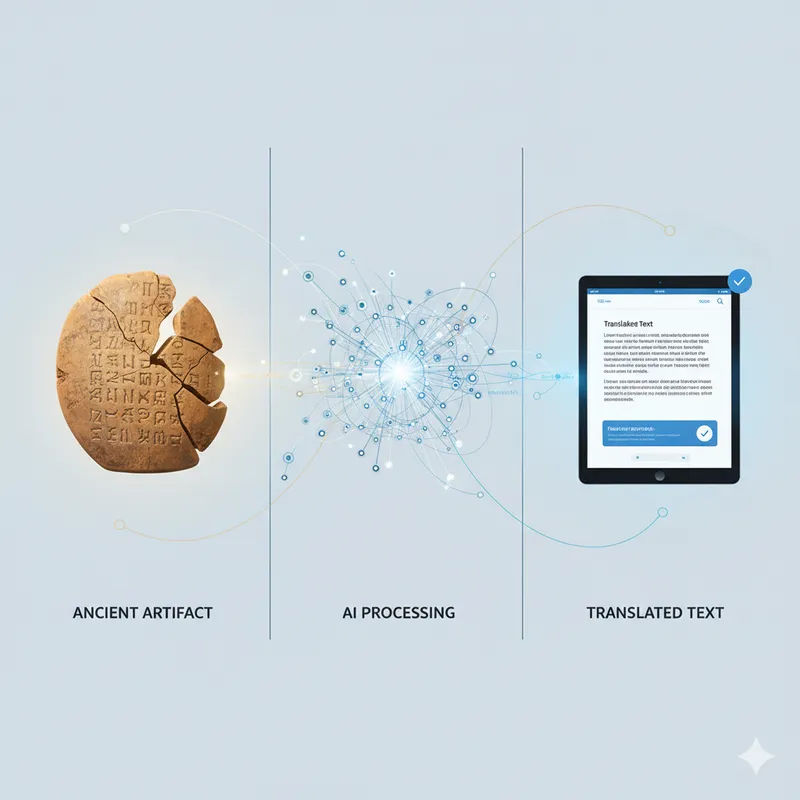
However, a new frontier in linguistics is emerging. By leveraging the power of machine learning and neural networks, researchers are now beginning to decode languages that have been dead for over 3,000 years. This isn't just about faster translation; it is about teaching machines to understand the structure of human thought, even when that thought was recorded in a script no living person has read for millennia.
The Fragility of Ancient Records
Deciphering an ancient language is not merely a matter of substitution. It is a puzzle of immense complexity. When we approach a script like Linear B or the Indus Valley script, we face several critical hurdles:
Lack of Bilingual Context: Most modern translation relies on parallel texts (e.g., the same text in Latin and Greek). Ancient scripts often lack this.
Script Evolution: Languages change over time. A symbol used in 2000 BCE may have meant something entirely different by 1500 BCE.
Physical Degradation: Tablets are often shattered or eroded, leaving only partial sentences or isolated words, making it impossible to establish grammatical patterns.
Historically, breakthroughs like the decipherment of Egyptian hieroglyphs relied on the Rosetta Stone, which provided the same text in three scripts. Without such a lucky find, linguists have relied on intuition, comparative linguistics, and years of trial and error. This is where Artificial Intelligence changes the game.
How AI Decodes the Indecipherable
AI, specifically in the form of deep learning and neural networks, does not "know" a language in the way a human does. Instead, it treats language as a complex statistical distribution.
Pattern Recognition and Distributional Semantics
At the core of AI-driven decipherment is the concept of distributional semantics. The hypothesis is simple: words that appear in similar contexts often have similar meanings. If an AI can scan thousands of fragments and observe that symbol 'A' frequently appears in the same positions as symbols 'B' and 'C' in other, known languages, it can begin to map the structure of the unknown script.
AI algorithms can process vast amounts of data that would take a human researcher a lifetime to review. By analyzing the frequency of symbols, the direction of writing (left-to-right, right-to-left, or boustrophedon), and the probability of symbol sequences, AI creates a mathematical model of the language's syntax. It doesn't need to know what the words mean initially; it only needs to identify the rules of the system.
Real-World Applications: From Cuneiform to Linear B
We are already seeing significant breakthroughs in this field.
Akkadian Cuneiform: Researchers have used AI to successfully translate Akkadian a language written in cuneiform that predates many known alphabets. By training models on thousands of transliterated tablets, the AI can now predict missing characters in broken tablets with surprising accuracy.
Linear B: While Linear B was deciphered by Michael Ventris in the 1950s using traditional methods, modern AI has been used to re-verify and even expand upon his findings, identifying subtle nuances in the Mycenaean Greek dialect that were previously overlooked.
The Indus Valley Script: This remains one of the great holy grails of archaeology. The script, used by the Indus Valley Civilization, remains undeciphered. AI is currently being used to test whether the script is a language at all or a system of non-linguistic symbols (like heraldry), by comparing its structural entropy against known human languages.
The "Rosetta Stone" Bottleneck
It is important to maintain a realistic perspective. AI is not a magic wand. The primary limitation remains the availability of data. For AI to function effectively, it requires a sufficient corpus a large enough body of text to identify patterns.
If we have only five or six inscriptions from an unknown civilization, AI cannot work its magic. It cannot "hallucinate" a language into existence. The success of AI in archaeology is directly proportional to the amount of archaeological data available.
Comparison of Methods
Feature
Traditional Linguistics
AI-Assisted Decipherment
Speed
Very Slow (Decades)
Rapid (Days/Weeks)
Pattern Identification
Limited by Human Memory
High (Processes millions of patterns)
Contextual Understanding
Deep, Nuanced
Statistical, Probabilistic
Data Requirement
Can work with small samples
Requires significant datasets
The Future: Human-AI Collaboration
Does this mean the human linguist is obsolete? Far from it. The most successful projects are those where AI acts as a partner to the human expert. The AI provides the statistical heavy lifting identifying potential grammar rules, mapping symbol distributions, and suggesting translations while the human expert provides the essential cultural and historical context that the machine lacks.
For example, an AI might suggest that a specific symbol sequence represents a deity. A human expert can then verify if that deity fits the known pantheon of that civilization at that specific time period. This collaborative loop is where the real breakthroughs happen.
Frequently Asked Questions (FAQ)
1. Can AI translate any ancient language?
No. AI requires a substantial corpus of text to function. If a language has very few surviving examples, there is not enough data for the machine learning models to identify patterns.
2. Why is AI better than humans at this task?
AI isn't necessarily "better" at understanding, but it is infinitely faster at identifying complex statistical patterns across massive datasets. It can see structural relationships that are invisible to the human eye.
3. Will AI eventually replace human archaeologists?
No. Archaeology requires on-site context, physical inspection, and historical intuition things that AI cannot replicate. AI is a tool, not a replacement.
4. Is the decipherment accurate?
It is probabilistic. AI provides the most likely interpretations based on data, but these must be vetted by human scholars to ensure historical and linguistic accuracy.
Summary
The use of AI to decode ancient languages is a profound development in our quest to understand human history. By automating the tedious process of pattern recognition, AI allows scholars to focus on the interpretation of meaning rather than the mechanics of the script. While it is not a cure-all for every lost language, it provides a powerful new lens through which we can view the past. As our datasets grow and our algorithms improve, the silence of the ancient world will continue to fade, replaced by the voices of those who lived 3,000 years ago.
Disclaimer: This article is for informational and educational purposes only and does not constitute professional advice. Please consult with academic experts or archaeological institutions for specialized research.
Share this article
Comments (0)
No comments yet. Be the first to comment!
R
Written by
Fact-Checked Editorial Team
Readholmes Editorial Team
Senior Editor & Subject Matter Specialist at Readholmes. Content is rigorously fact-checked and reviewed against Google Search Quality Rater Guidelines for accuracy, timeliness, and user helpfulness.
The Shadow Inventors: The Mathematicians Who Built Modern Encryption in Secret
Decades before the internet became the backbone of global commerce, British mathematicians at GCHQ solved the greatest riddle in cryptography, only to be silenced by the Official Secrets Act.
Why the Ocean Floor Holds More Secrets About Human History Than Every Museum on Earth Combined
While museums curate a fraction of our past, the ocean floor hides vast, untouched archives of human civilization. Explore why the deep sea is the ultimate repository of our forgotten history.
While a universal 'cure' for cancer remains elusive, the landscape of oncology is shifting from broad-spectrum treatments to highly personalized, precision medicine. This article explores the current breakthroughs, the challenges of cancer heterogeneity, and what the future of cancer care actually looks like.