Scientists Stunned: Newly Discovered Hybrid Eye Cell Could Rewrite 150 Years of Biology
Readholmes Editorial Team
February 27, 2026
0
For more than a century and a half, biology textbooks have taught a fundamental truth about vision: the retina relies on two distinct types of photoreceptor cells. We have rods for seeing in the dark and cones for perceiving color in bright light. This division, known as the "Duplicity Theory," has been the cornerstone of ophthalmology since Max Schultze first proposed it in 1866.
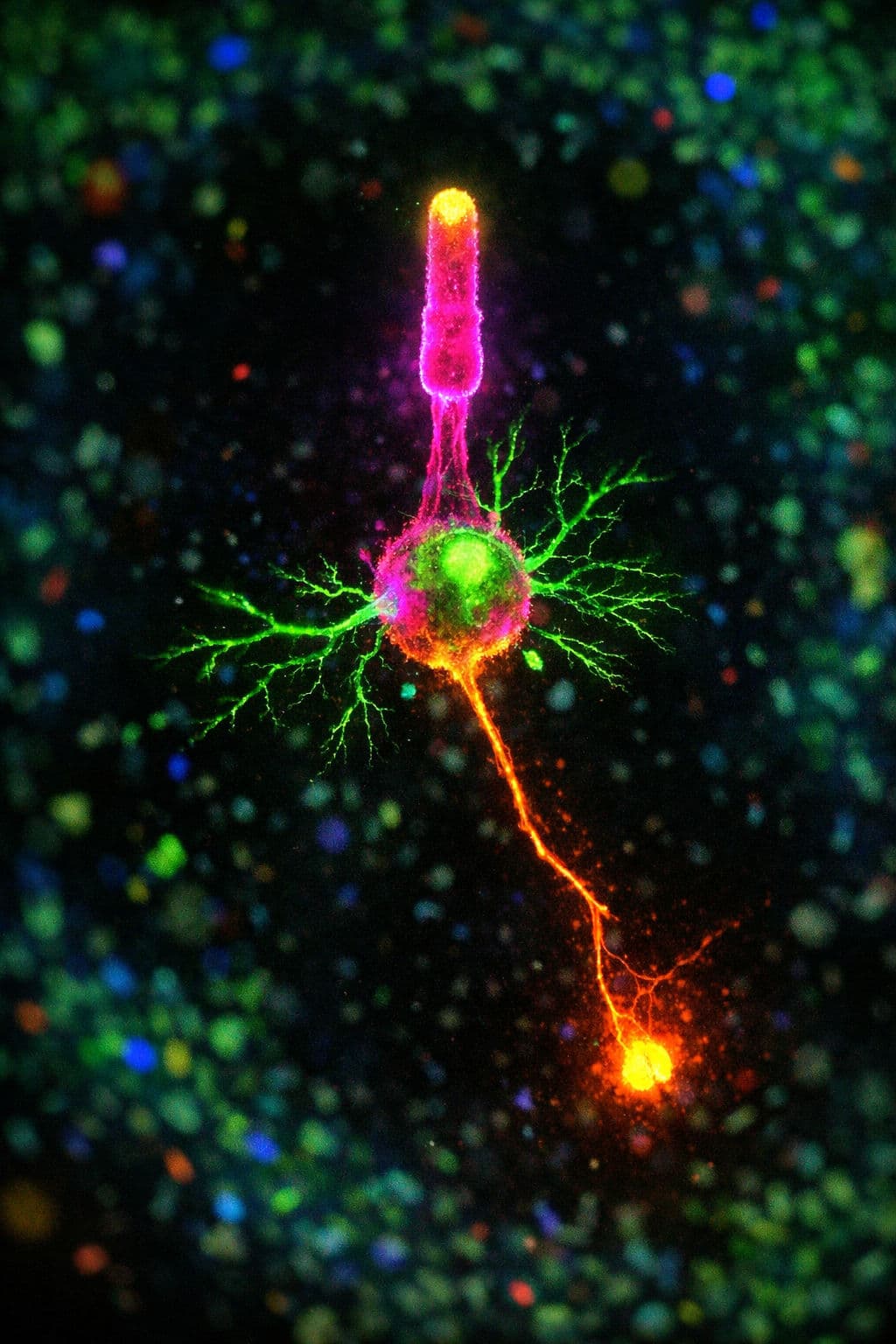
However, a stunning discovery is currently sending shockwaves through the scientific community. Researchers have identified a hybrid eye cell that possesses the characteristics of both rods and cones. This discovery doesn't just add a new footnote to biological science; it threatens to dismantle the very foundation of how we understand sight, evolution, and even the treatment of degenerative eye diseases.
In this article, we will explore what these hybrid cells are, how they were discovered, and why this shift in perspective is being hailed as one of the most significant breakthroughs in sensory biology in the last century.
The 150-Year-Old Dogma: Rods vs. Cones
To understand why scientists are so surprised, we must first look at the rulebook that is being rewritten. For 158 years, the scientific consensus was built on a binary system.
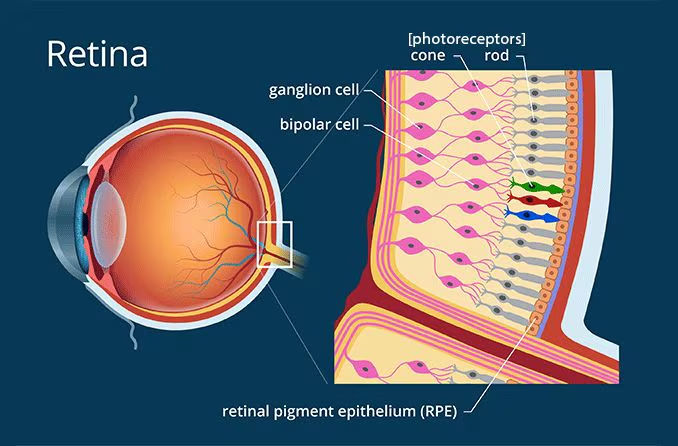
Rods: These are highly sensitive to light. They allow us to see in dim conditions but do not perceive color. They are the reason you can navigate your bedroom at night but can't tell if your socks are blue or black.
Cones: These require much more light to activate. They provide high-resolution detail and allow us to see the full spectrum of colors. Humans typically have three types of cones (red, green, and blue).
This division seemed absolute. Scientists believed a cell was either a rod or a cone, with no middle ground. This "duality" explained everything from why we are temporarily blinded when walking from a dark theater into sunlight to how nocturnal animals navigate the world.
The discovery of a hybrid cell suggests that the eye is far more plastic and adaptable than we ever dared to imagine.
The Discovery of the "Hybrid" Cell
The breakthrough came when researchers began using advanced single-cell RNA sequencing and high-resolution imaging to look at the retinas of various species, including certain fish and amphibians that live in fluctuating light environments.
What they found was a population of cells that looked like rods but functioned like cones—or vice versa. These cells didn't just have features of both; they were actively "transmuting" or existing in a permanent state of hybridity.
How Do Hybrid Cells Work?
These cells possess the molecular machinery of both traditional photoreceptors. For example, they might use the high-sensitivity proteins found in rods to capture single photons of light, but utilize the fast-recovery pathways of cones to ensure they don't become "saturated" or overwhelmed in bright light.
Feature
Rod Cells
Cone Cells
Hybrid Cells
Light Sensitivity
Extremely High
Low
Adaptive/Variable
Color Perception
None (Grayscale)
High (RGB)
Limited to Moderate
Recovery Speed
Slow
Fast
Optimized/Intermediate
Primary Environment
Low Light (Scotopic)
Bright Light (Photopic)
Twilight/Transition (Mesopic)
Why This Discovery Matters
You might wonder why a single cell type matters to the average person. The implications are actually profound, touching on everything from how we evolved to how we might cure blindness.
1. Rewriting Evolutionary History
For decades, evolutionary biologists believed that rods and cones evolved separately to fill different niches. The existence of hybrid cells suggests a much more fluid evolutionary path. It implies that rods may have evolved from cones (or vice versa) through a process of transmutation. This changes our understanding of how life adapted to the transition from deep-sea environments to shallow waters and eventually to land.
2. New Hope for Retinal Diseases
Many forms of blindness, such as Retinitis Pigmentosa or Age-Related Macular Degeneration (AMD), involve the death of specific photoreceptor cells. Usually, the rods die first, followed by the cones.
If scientists can understand how a cell "decides" to be a hybrid, they might be able to trigger a survival mechanism in the eye. Imagine "reprogramming" a dying rod cell to take on the characteristics of a hardy hybrid cell, potentially halting the progression of blindness.
3. Understanding "Twilight" Vision
Humans have always struggled with "mesopic" vision—that awkward time during dusk or dawn when it's too bright for rods but too dim for cones. This is when most car accidents occur because our visual processing is at its weakest. If hybrid cells exist in the human retina (which is currently being investigated), it could explain how some individuals have superior night vision or better adaptability to changing light.
The "Transmutation" Theory
One of the most exciting aspects of this discovery is the Transmutation Theory. This theory suggests that photoreceptors are not fixed in their identity. In response to environmental stress or light changes, a rod can actually turn into a cone-like cell to survive.
This was observed in species like the deep-sea pearleye, which lives in near-total darkness but occasionally encounters flashes of bioluminescence. Their eyes have evolved hybrid cells to handle these extreme shifts. Scientists are now asking: Does the human eye possess this same latent ability?
Note: While this research is currently focused on non-human models, the underlying genetic pathways are remarkably similar across all vertebrates, including humans.
Challenges and Controversies
As with any major scientific shift, there is skepticism. Some researchers argue that these "hybrid" cells are merely developmental mistakes—cells that didn't quite finish their journey to becoming a rod or a cone.
However, the consistency with which these cells appear in specific species suggests they are a deliberate evolutionary advantage, not a biological error. The challenge now lies in identifying these cells in the human eye, which is much more complex and harder to study at a live, cellular level.
Is it suitable for everyone to know?
While the science is complex, the takeaway is simple: Nature is rarely binary. The "black and white" (or rod and cone) view of the world was a human simplification of a much more colorful and nuanced reality.
Step-by-Step: How the Discovery Happened
If you're interested in the scientific process, here is how the team reached these stunning conclusions:
Step 1: Genomic Mapping. Researchers mapped the active genes in thousands of individual retinal cells.
Step 2: Protein Identification. They looked for "signature" proteins that were previously thought to be exclusive to rods or cones.
Step 3: Functional Testing. Using specialized micro-electrodes, they measured how these specific cells reacted to different wavelengths and intensities of light.
Step 4: Cross-Species Comparison. They compared the results across multiple classes of animals to see if the pattern held true.
Step 5: Peer Review. The findings were scrutinized by independent experts to ensure the "hybrid" behavior wasn't a result of lab contamination or imaging artifacts.
Frequently Asked Questions (FAQ)
Does this mean humans have a 'third type' of eye cell?
Technically, we already have a third type called Intrinsically Photosensitive Retinal Ganglion Cells (ipRGCs), which regulate our sleep-wake cycles. However, the new discovery refers to a hybrid of the primary image-forming cells (rods and cones). Research is ongoing to confirm if these hybrids exist in humans or if we lost them during evolution.
How will this change eye exams in the future?
In the short term, it won't change your standard vision test. However, in the long term, it could lead to new diagnostic tools that detect eye diseases much earlier by looking at the health and 'state' of these hybrid cells before traditional rods and cones begin to fail.
Can these hybrid cells see colors we haven't discovered yet?
No. Color is a product of how our brain interprets different wavelengths of light. Hybrid cells don't create new colors, but they might change how we perceive contrast and detail in low-light conditions, potentially making our 'night vision' more detailed than previously thought.
Is this discovery related to 'The Dress' color controversy?
While not directly related, discoveries like this highlight how much variation exists in individual vision. It reinforces the idea that how you see the world might be biologically different from how someone else sees it based on the specific makeup of your retinal cells.
Summary of Key Takeaways
The End of Duality: The 150-year-old belief that the eye only uses rods and cones is being replaced by a more fluid, hybrid model.
Evolutionary Bridge: Hybrid cells provide a missing link in how vision evolved to adapt to different light environments.
Medical Potential: Understanding how cells transmute could unlock new treatments for degenerative blindness and retinal decay.
Scientific Progress: This discovery was only possible thanks to modern technology like single-cell RNA sequencing, proving that even "settled" science can be overturned with better tools.
Final Thoughts
The discovery of the hybrid eye cell is a humbling reminder that the more we look, the more we realize how little we truly know about the human body. For over a century, we were content with a simple explanation for vision. Now, we are entering a new era of "Vision 2.0," where the boundaries between light and dark, color and grayscale, are beginning to blur.
As researchers continue to probe the depths of the retina, we may find that our eyes are even more powerful—and more adaptable—than we ever imagined. The next time you watch a sunset and see the colors slowly fade into the gray of twilight, remember: there may be a specialized group of "hybrid" cells working overtime to make sure you don't lose your way.
Disclaimer:This article is for informational purposes only and does not constitute medical advice. If you are experiencing changes in your vision, please consult a qualified ophthalmologist or healthcare professional. Scientific findings in this field are rapidly evolving and subject to further peer review and validation.
Share this article
Comments (0)
No comments yet. Be the first to comment!
R
Written by
Fact-Checked Editorial Team
Readholmes Editorial Team
Senior Editor & Subject Matter Specialist at Readholmes. Content is rigorously fact-checked and reviewed against Google Search Quality Rater Guidelines for accuracy, timeliness, and user helpfulness.
The Shadow Inventors: The Mathematicians Who Built Modern Encryption in Secret
Decades before the internet became the backbone of global commerce, British mathematicians at GCHQ solved the greatest riddle in cryptography, only to be silenced by the Official Secrets Act.
Why the Ocean Floor Holds More Secrets About Human History Than Every Museum on Earth Combined
While museums curate a fraction of our past, the ocean floor hides vast, untouched archives of human civilization. Explore why the deep sea is the ultimate repository of our forgotten history.
Cracking the Code: How AI Is Resurrecting Languages Lost for 3,000 Years
Artificial intelligence is transforming archaeology by deciphering ancient scripts that have remained silent for millennia, offering a new bridge to our forgotten past.