The Clock is Ticking: FIFA’s 10-Second Substitution Rule and the Future of Football
Readholmes Editorial Team
March 28, 2026
0
The Clock is Ticking: FIFA’s 10-Second Substitution Rule and the Future of Football
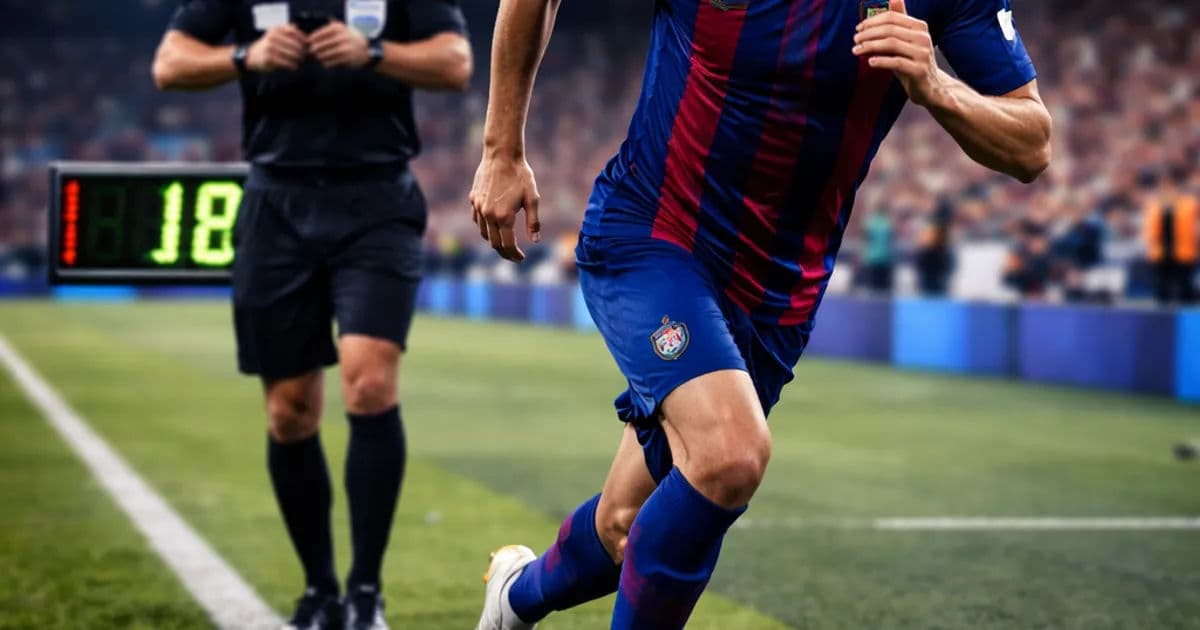
The beautiful game is constantly evolving, not just in terms of player athleticism or tactical sophistication, but in the very laws that govern how the sport is played. For decades, the substitution process was a moment of theatre. A player leaving the pitch would often walk slowly, acknowledging the fans, shaking hands with teammates, and taking a deliberate, final stroll that ate up precious seconds of the match. While fans often enjoyed the drama, referees and governing bodies saw something else: gamesmanship.
FIFA has officially tightened the reins. The new directive, which mandates that players must leave the pitch within 10 seconds of being substituted, marks a clear shift toward maximizing "effective playing time." For players, managers, and fans, this means the iconic, slow-motion walk-off is officially a thing of the past.
The 10-Second Rule: Why Now?
The primary motivation behind this rule is simple: time-wasting. In the final minutes of a tight match, a winning team would often make substitutions that lasted upwards of 30 to 45 seconds, effectively killing the momentum and frustrating the opposition. By enforcing a 10-second limit, FIFA is essentially forcing teams to prioritize efficiency over theatrics.
This isn't just about speed; it’s about the integrity of the match clock. When a player is substituted, they must now exit at the nearest point on the touchline rather than walking all the way to the technical area. If a player takes longer than 10 seconds, officials are now empowered to take action, which could lead to cautions for delaying the restart of play.
Other Recent Rule Changes Transforming Football
The 10-second substitution rule is part of a broader wave of adjustments designed to clean up the game and utilize technology to reduce errors. Here are some of the most significant changes that have recently reshaped the landscape of football.
1. Semi-Automated Offside Technology (SAOT)
Perhaps the most impactful technological leap, SAOT uses tracking cameras and sensors within the ball to determine offside positions in real-time. This has drastically reduced the time spent on VAR checks. By removing the manual process of drawing lines across the screen, the game flows significantly better while maintaining accuracy.
2. Handball Rule Clarifications
The handball rule has been a point of contention for years. Recent updates have focused on the "natural silhouette" of the body. If the arm is in an unnatural position making the body bigger it is a handball. However, if the ball deflects off the player's own body first, or if they are falling and the arm is supporting their weight, referees are now given more discretion to wave play on. This nuance is crucial for fair play.
3. Concussion Substitutions
Player safety has taken center stage with the introduction of concussion substitutes. Teams are now allowed an additional substitution if a player suffers a suspected head injury. This rule ensures that a team is not penalized for prioritizing a player’s health, effectively removing the pressure to keep an injured player on the pitch for tactical reasons.
The Pros and Cons of Stricter Enforcement
While these changes are designed to improve the spectacle, they are not without their critics. Let’s look at the balance of these modern adjustments.
Feature
Pros
Cons
10-Second Rule
Reduces time-wasting; increases effective play.
Can feel rushed; removes player-fan interaction.
SAOT
Extremely accurate; faster decision-making.
Can feel 'robotic'; removes human element of doubt.
Concussion Subs
Prioritizes player safety above all.
Potential for abuse if not monitored correctly.
Handball Nuance
More logical interpretation of intent.
Still relies on subjective referee discretion.
How These Rules Affect Match Strategy
For managers, these rules necessitate a change in game management. In the past, a manager might bring on a substitute in the 89th minute primarily to kill time. Now, that player must be ready to enter the game immediately, and the player coming off must be tactically aware of their exit path to avoid a yellow card for time-wasting.
This puts more pressure on the players to be disciplined. It also changes the psychological dynamic of the final minutes. The winning team can no longer rely on slow exits to protect a lead; they must rely on their defensive structure and ability to keep the ball in play.
Frequently Asked Questions (FAQ)
What happens if a player is injured and cannot leave in 10 seconds?
Referees are trained to use common sense. If a player is genuinely injured, the 10-second rule does not apply. The focus is purely on gamesmanship and deliberate time-wasting, not on players who are physically unable to move quickly.
Does the 10-second rule apply to all levels of football?
While FIFA implements these at the World Cup and international levels, individual leagues and federations have the discretion to adopt or adapt these rules. However, most top-tier leagues tend to follow FIFA's lead to maintain consistency.
Can a player be sent off for taking too long to leave?
While a yellow card is the standard for delaying the restart of play, if a player is already on a yellow, a second infraction could lead to a red card. It is a significant risk for a player to take.
Is the 'walk-off' truly dead?
While the slow, leisurely stroll is gone, players can still acknowledge the crowd, but they must do so while moving briskly toward the exit. It requires a new kind of efficiency.
Summary
Football is moving toward a faster, more transparent, and safer version of itself. The 10-second substitution rule is just one piece of a larger puzzle aimed at curbing time-wasting and ensuring that the clock reflects actual play. While some fans may miss the dramatic walk-offs of the past, the trade-off is a game that is more dynamic and focused on the action on the pitch. As technology like SAOT and new protocols for player safety continue to integrate, the sport remains as compelling as ever, even if it is a little more hurried than it used to be.
Share this article
Comments (0)
No comments yet. Be the first to comment!
R
Written by
Readholmes Editorial Team
Contributing writer at Readholmes. Our authors are passionate about delivering accurate, well-researched content to help readers make informed decisions.
The Night That Changed Everything: Understanding Tiger Woods’ 2017 DUI Arrest and Its Aftermath
Golf icon Tiger Woods has been charged with DUI, property damage, and refusal to submit to testing following a rollover crash in Jupiter Island, Florida. Here is a breakdown of the reported details and the legal context surrounding the incident.
Raphinha Injury Update: Barcelona Star Out for 5 Weeks Tactical Implications and Fixture Impact
Barcelona faces a major setback as Raphinha is confirmed to be sidelined for up to five weeks due to a muscle injury, forcing the team to navigate a critical stretch of La Liga and Champions League fixtures without one of their most dynamic attackers.
Rodri’s Future: Analyzing the Man City Contract Situation and Real Madrid Speculation
Football superstar Rodri has sparked intense speculation about his future after hinting that a move to Real Madrid remains a possibility as his contract with Manchester City nears its conclusion.