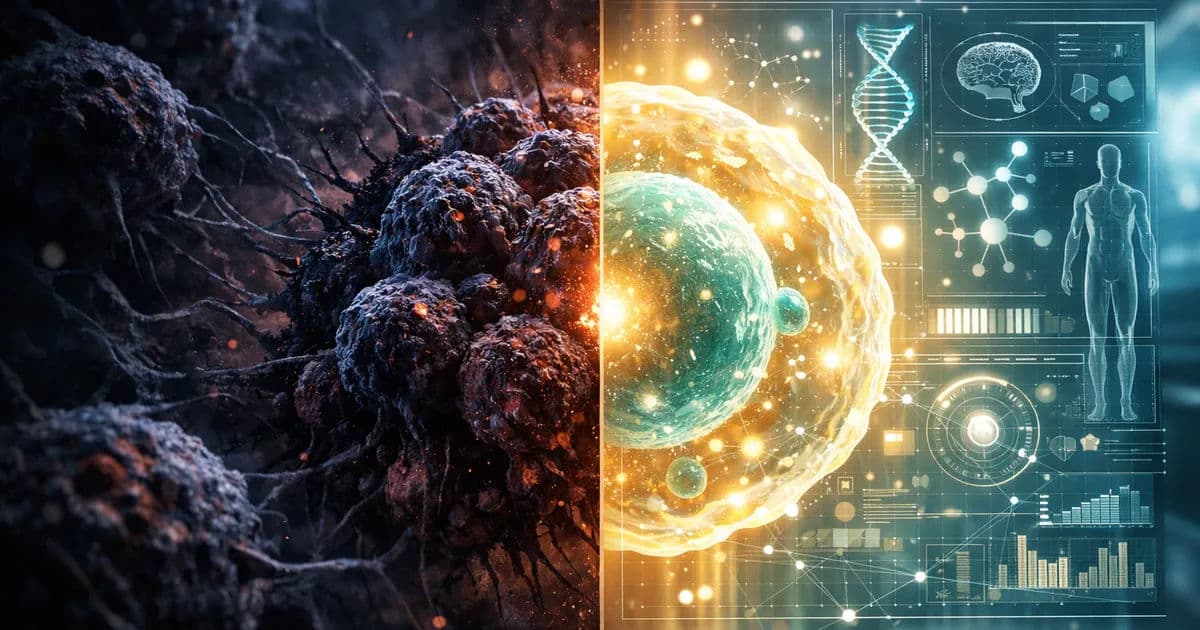
For decades, the phrase "a cure for cancer" has been a rallying cry, a destination we all hope to reach. But as our understanding of biology has deepened, the scientific community has begun to shift its perspective. We are realizing that cancer is not a single disease to be defeated by a single "magic bullet." Instead, it is a complex, evolving, and highly individual set of biological errors.
If you have ever wondered why we haven't "solved" cancer yet despite billions in research funding, you are not alone. The answer lies in the sheer, staggering complexity of the human genome and the adaptability of malignant cells. In this article, we will cut through the hype and look at where we actually stand, how the definition of a "cure" is changing, and why the future of oncology is more promising and more nuanced than ever before.
The Myth of a Single "Cancer Cure"
To understand why a single cure doesn't exist, we must first understand what cancer actually is. Cancer is a term used to describe hundreds of different diseases, all characterized by the uncontrolled division of abnormal cells. A lung tumor in one patient may be driven by entirely different genetic mutations than a lung tumor in another.
Because of this, the "one-size-fits-all" approach relying solely on surgery, radiation, or broad-spectrum chemotherapy has limitations. These treatments often act like a sledgehammer, damaging healthy tissue while attempting to destroy the malignancy. The modern race to cure cancer is not about finding one drug that kills all tumors; it is about finding a thousand precise tools that stop specific biological processes in specific patients.
Note: The shift in modern medicine is moving away from the term "cure" and toward "long-term remission" and "chronic management," where cancer is treated more like a manageable condition rather than a death sentence.
The Evolution of Oncology: From Sledgehammers to Scalpels
We have entered the era of precision medicine. The history of cancer treatment can be broken down into distinct phases, each building upon the last.
Era
Primary Method
Focus
Limitation
1900s-1970s
Surgery & Radiation
Physical removal/destruction
Incomplete removal; systemic spread
1980s-2000s
Chemotherapy
Killing rapidly dividing cells
High toxicity to healthy cells
2010s-Present
Targeted Therapy/Immunotherapy
Molecular-level intervention
Cost, resistance, heterogeneity
The Rise of Immunotherapy
Perhaps the most exciting development in the last decade is immunotherapy. Instead of attacking the cancer directly with chemicals, this approach teaches the body’s own immune system to recognize and destroy the malignant cells. Drugs like checkpoint inhibitors have revolutionized the treatment of melanoma and certain types of lung cancer, turning terminal diagnoses into manageable, long-term conditions for many patients.
The Frontiers of Modern Research
While immunotherapy is a massive step forward, researchers are currently pushing into even more advanced territories.
1. mRNA Vaccines
Following the success of mRNA technology during the COVID-19 pandemic, researchers are now applying this same platform to cancer. The goal is to create personalized vaccines that teach the immune system to hunt for specific proteins found only on a patient’s unique tumor. This is not a preventative vaccine in the traditional sense, but a therapeutic one designed to prevent recurrence.
2. AI and Early Detection
Cancer is most curable when caught early. Artificial Intelligence is currently being used to analyze medical imaging such as X-rays, MRIs, and CT scans with a level of accuracy that often surpasses human radiologists. By identifying microscopic changes in tissue long before a tumor becomes symptomatic, AI could significantly improve survival rates across almost all cancer types.
3. CRISPR and Gene Editing
Gene editing technology like CRISPR offers the potential to "re-program" cancer cells or even the immune cells themselves to make them more effective hunters. While still largely in the clinical trial phase, the ability to edit the genetic code of a patient's immune cells (CAR-T therapy) has already seen remarkable success in treating certain blood cancers.
The Hurdles: Why We Aren't There Yet
If the technology is so advanced, why are we still losing people to this disease? The challenges are as much biological as they are logistical.
Tumor Heterogeneity: A tumor is not a uniform block of identical cells. It is a diverse ecosystem. Even if a drug kills 99% of the cells, the 1% that survive are often the ones that have mutated to become resistant to the treatment. This "evolutionary" nature of cancer makes it incredibly difficult to eradicate completely.
Access and Cost: The most advanced treatments such as personalized mRNA vaccines or CAR-T cell therapies are astronomically expensive. Ensuring that these life-saving technologies are available to the general population, not just the wealthy, is a massive socioeconomic challenge.
Late-Stage Diagnosis: Despite advancements in screening, many cancers remain silent until they have metastasized. Improving global access to basic screening programs remains one of the most effective ways to lower mortality rates.
Redefining Success: What Does "Winning" Look Like?
Winning the race against cancer might not look like a single headline-grabbing event where the disease is "cured" forever. Instead, it looks like a continuous, steady decline in mortality rates. It looks like a world where a cancer diagnosis is treated with the same clinical efficiency as a chronic illness like diabetes or hypertension.
We are already seeing this. Mortality rates for many cancers have been steadily dropping over the last 30 years due to better screening, earlier detection, and more targeted treatments. That is not a failure; that is a massive, ongoing success story.
Frequently Asked Questions
Are we close to a universal vaccine for cancer?
Currently, there is no "universal" vaccine. Because cancer is caused by thousands of different genetic mutations, a one-size-fits-all vaccine is unlikely. However, we are making rapid progress on personalized vaccines, which are tailored to the specific genetic makeup of an individual's tumor.
Is cancer purely genetic?
No. While genetics play a role, cancer is caused by a combination of genetic factors, environmental exposures, lifestyle choices, and random cellular mutations. You can reduce your risk, but you cannot eliminate it entirely.
Why do some cancers seem easier to treat than others?
Some cancers are more "immunogenic," meaning they are easier for the immune system to recognize and attack. Others are "cold" tumors, which effectively hide from the immune system. Research is currently focused on how to turn "cold" tumors "hot" to make them more susceptible to treatment.
Can AI really detect cancer better than doctors?
AI is currently a powerful tool to assist doctors, not replace them. It excels at spotting patterns in massive datasets that a human might miss, but it still requires human expertise to interpret results and make treatment decisions.
Summary
The race to cure cancer is not a sprint; it is an ultra-marathon. We have moved past the era of viewing cancer as a single, monolithic enemy. Today, we understand it as a complex, adaptable, and highly individual set of biological challenges. Through the combination of precision medicine, immunotherapy, and AI, we are entering a new frontier where outcomes are better than ever before. While a total eradication may remain a distant goal, the true victory lies in the thousands of lives saved every year through smarter, more personalized, and more effective care.
Disclaimer: This article is for informational purposes only and does not constitute medical advice, diagnosis, or treatment. Always seek the advice of your physician or other qualified health provider with any questions you may have regarding a medical condition. Never disregard professional medical advice or delay in seeking it because of something you have read in this article.
Share this article
Comments (0)
No comments yet. Be the first to comment!
R
Written by
Fact-Checked Editorial Team
Readholmes Editorial Team
Senior Editor & Subject Matter Specialist at Readholmes. Content is rigorously fact-checked and reviewed against Google Search Quality Rater Guidelines for accuracy, timeliness, and user helpfulness.
The Shadow Inventors: The Mathematicians Who Built Modern Encryption in Secret
Decades before the internet became the backbone of global commerce, British mathematicians at GCHQ solved the greatest riddle in cryptography, only to be silenced by the Official Secrets Act.
Why the Ocean Floor Holds More Secrets About Human History Than Every Museum on Earth Combined
While museums curate a fraction of our past, the ocean floor hides vast, untouched archives of human civilization. Explore why the deep sea is the ultimate repository of our forgotten history.
Cracking the Code: How AI Is Resurrecting Languages Lost for 3,000 Years
Artificial intelligence is transforming archaeology by deciphering ancient scripts that have remained silent for millennia, offering a new bridge to our forgotten past.